
Introduction
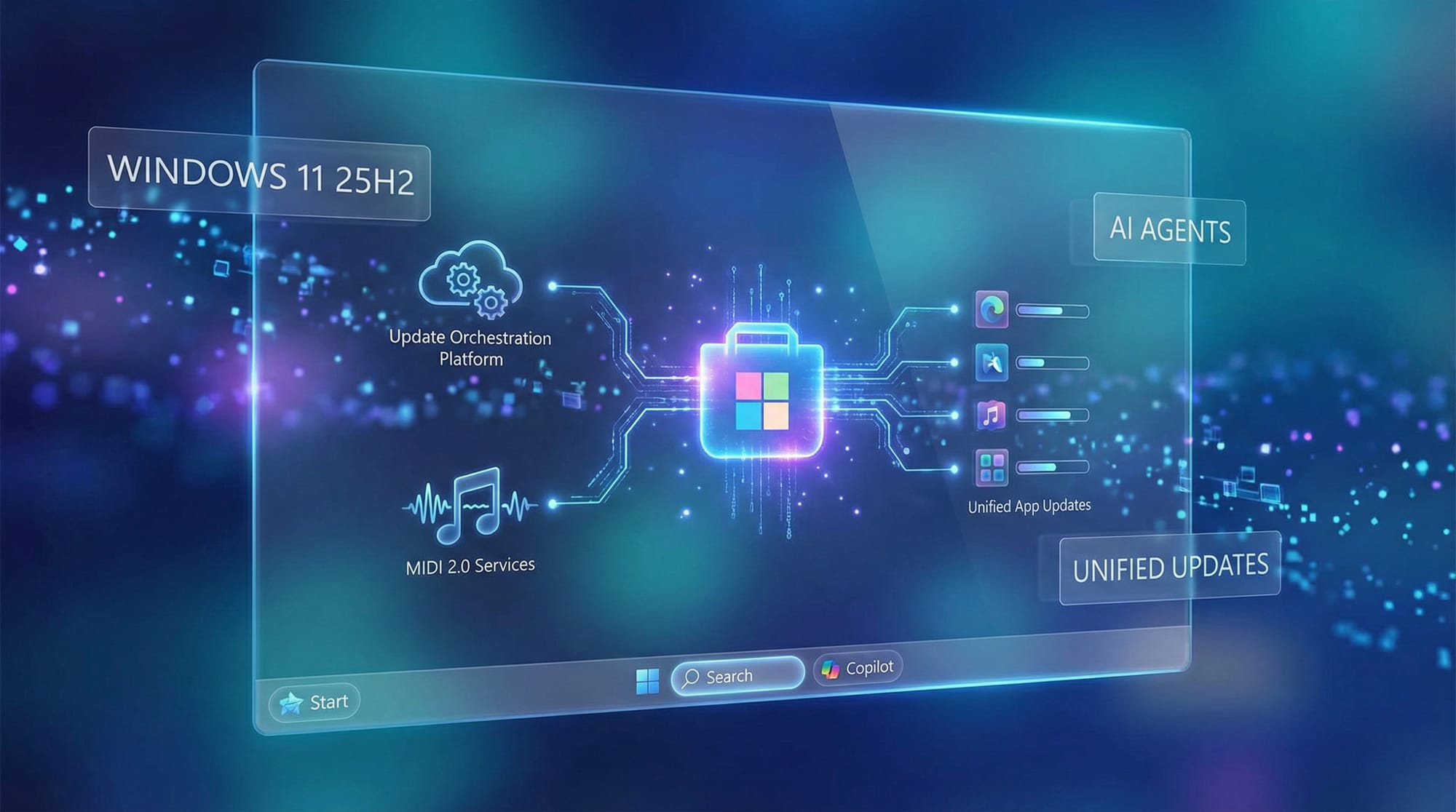
On December 5, 2025, Microsoft deployed Windows 11 Insider Preview Build 26220.7344 (KB5070316) to developers and beta testers across the Dev and Beta channels, signaling significant infrastructure advancements heading toward the final Windows 11 version 25H2. This latest development build consolidates several major platform initiatives that address long-standing friction points in Windows 11's application ecosystem, music production workflows, and system update mechanisms. The release underscores Microsoft's commitment to modernizing core operating system functionality while simultaneously deepening integration between the Windows environment and cloud-hosted AI capabilities. For developers, IT administrators, and power users, this build represents a preview of substantial workflow improvements that will eventually reach mainstream Windows 11 installations in future public releases.
What's New: Infrastructure Refresh and Developer-Focused Enhancements
Build 26220.7344 introduces four significant feature areas that collectively reshape how Windows 11 manages applications, handles multimedia protocols, and coordinates system updates.
Microsoft Store Integration in Open With Dialog
The updated "Open With" interface now displays compatible applications directly from the Microsoft Store when users attempt to open file types lacking installed handlers. Previously, Windows would present users with a generic Store redirect, requiring manual navigation and search. The new implementation shortcircuits this friction by surfacing recommended applications inline and enabling single-click installation without exiting the Open With dialog.
This enhancement addresses a persistent usability gap where users encountering unsupported file formats faced unintuitive workflows. The store-suggested applications reflect compatibility analysis based on file type and user's existing application ecosystem.
Quick Machine Recovery Expands to Windows 11 Pro
Microsoft enabled Quick Machine Recovery (QMR) by default on Windows 11 Professional installations running on non-domain-joined systems. Previously reserved for the Home edition, this feature provides machine-level recovery capabilities without requiring administrative complexity. Domain-joined business systems remain unaffected, allowing IT administrators to maintain centralized control over recovery policies and procedures.
Windows MIDI Services Achieves Production Readiness
The finalized Windows MIDI Services implementation establishes a modernized architecture for handling Musical Instrument Digital Interface (MIDI) protocols across Windows 11. This represents the culmination of multi-year development efforts to replace Windows' aging MIDI infrastructure with a contemporary framework supporting both legacy MIDI 1.0 and emerging MIDI 2.0 specifications.
The production release includes several capabilities that had been unavailable under the legacy architecture:
Multi-client MIDI port access allowing multiple applications simultaneous access to individual MIDI devices—a long-requested feature from professional musicians and producers. Complete backward compatibility with existing MIDI 1.0 devices and applications through automatic translation layers. Native MIDI 2.0 feature support including enhanced resolution and message structure. Loopback MIDI ports enabling inter-application MIDI routing and virtual instrument chaining. Comprehensive API support for both WinMM (legacy) and WinRT (modern) development frameworks.
Update Orchestration Platform Begins Rollout
Microsoft introduced the Update Orchestration Platform (UOP), a new centralized application update coordination system that standardizes how Windows manages third-party application patches. Unlike the Microsoft Store's automatic update mechanism, UOP extends unified update management to applications distributed through independent channels—including enterprise software, gaming platforms, and productivity tools maintained outside the Microsoft Store ecosystem.
The feature introduces a new "App updates" panel within Settings → Applications, providing users visibility into pending updates and enabling manual refresh triggers. Developer participation remains entirely optional; third-party software vendors must explicitly integrate with UOP APIs to leverage the platform's coordinated update scheduling and installation.
Currently, no mainstream applications utilize UOP due to its recent introduction; adoption will accelerate as developers implement the published APIs and recognize workflow efficiency benefits.
Technical Analysis: Architectural Decisions and Implementation Details
Microsoft Store Integration Architecture
The revised Open With implementation queries Microsoft's cloud-hosted application catalog against file type signatures, matching supported file extensions with store-published applications. The recommendation engine evaluates application popularity, user ratings, and content-specific attributes to surface most-relevant suggestions. Installation proceeds through the Store's standard acquisition and deployment pipeline, ensuring security scanning and license validation occur before application binaries reach the user's system.
This architecture avoids modifying local application registry entries or file type associations, maintaining system security posture and preventing unauthorized handler registration.
MIDI Services Technical Foundation
Windows MIDI Services implements a transport abstraction layer that decouples applications from underlying hardware capabilities. MIDI 1.0 devices connect through legacy drivers that feed into a translation layer, automatically converting 1.0 message formats into 2.0 equivalents for the unified routing engine. Applications requesting 2.0-native features interact with drivers through updated APIs, while legacy applications continue receiving 1.0-formatted messages through compatibility shims.
This bidirectional translation ensures seamless interoperability: contemporary applications gain access to MIDI 2.0 capabilities while legacy software continues functioning unchanged. The architecture enables microphone and digital audio workstation (DAW) software to share MIDI input from a single controller—previously requiring specialized virtual MIDI cable software or complex configuration.
Update Orchestration Platform Integration Pattern
Developers register applications as UOP-compliant "update providers" by supplying executable paths that implement update-checking logic. Windows periodically executes these scanners on a predetermined schedule, collecting version information and available updates. When updates are discovered, the application communicates update details back to Windows through UOP APIs, and Windows coordinates installation timing based on user activity patterns and system resource availability.
This approach preserves developers' existing update distribution infrastructure while delegating timing and coordination to Windows. Applications continue downloading from their content delivery networks (CDNs) and maintaining proprietary versioning schemas; Windows simply orchestrates when installations occur to minimize user disruption.
Impact and Business Implications: User Experience and Ecosystem Effects
User Productivity Improvements
Simplified file-opening workflows reduce friction when encountering unfamiliar file formats. The consolidated application update interface consolidates notifications and installation prompts that previously scattered across multiple system locations, reducing notification fatigue and improving update compliance rates.
Music Production and Audio Sector Opportunities
Finalized MIDI Services infrastructure enables Windows 11 to compete more effectively with macOS in professional audio production environments. Multi-client MIDI support addresses a critical gap that previously forced many music producers toward Apple platforms. Software vendors serving music production markets now have clear technical pathways to deliver sophisticated MIDI workflows without workarounds.
Developer Ecosystem Alignment
UOP represents Microsoft's attempt to standardize application lifecycle management across the Windows ecosystem. Enterprise software vendors, independent game developers, and productivity tool publishers gain access to coordinated update systems comparable to mobile app store infrastructure. This standardization may accelerate adoption of Windows as a platform for independent software distribution outside traditional enterprise channels.
Professional Workflow Enhancement
IT administrators benefit from centralized visibility into application update status across managed deployments. Rather than monitoring heterogeneous update mechanisms scattered across dozens of independent software vendors, administrators can reference a single source for update progress and compliance reporting.
Expert Analysis: Strategic Direction and Market Context
Windows 11 version 25H2 represents Microsoft's bet on a more integrated, AI-capable operating system where cloud connectivity and local processing form complementary relationships. Build 26220.7344 reflects pragmatic technical decisions prioritizing developer adoption and backward compatibility over feature purity.
The Microsoft Store integration in Open With addresses growing frustration with app discovery friction on Windows platforms. By surfacing store applications contextually at moments users need them, Microsoft increases Store application adoption without heavy-handed platform mandates that might trigger developer resistance.
MIDI Services finalization demonstrates Microsoft's commitment to professional workload support, directly competing with macOS's stronghold in music production. The backward-compatible architecture avoids forcing existing software updates while enabling gradual ecosystem migration toward newer APIs and capabilities.
UOP reflects broader industry trends toward unified software lifecycle management. Similar patterns emerged on iOS and Android years ago; Windows is implementing comparable infrastructure to simplify update coordination for users and developers alike. However, purely optional adoption means uptake depends entirely on developer incentive alignment—the platform succeeds only when significant software vendors perceive clear benefit.
The inclusion of Model Context Protocol (MCP) support signals Microsoft's deeper integration with AI-powered agent frameworks. By exposing Windows capabilities through MCP connectors, Microsoft positions Windows as an infrastructure foundation for autonomous AI assistants that manage files, adjust settings, and coordinate complex workflows through natural language interfaces.
What to Do Next: Testing and Adoption Pathways
For Windows Insider Program Participants
Enroll in the Beta channel through Settings → Windows Update → Windows Insider Program to access Build 26220.7344 and monitor ongoing development updates. Document feedback regarding MIDI compatibility if you maintain music production workloads; Microsoft's developer relations team actively incorporates audio professional input into production refinement.
Test Update Orchestration Platform compatibility on applications supporting the new framework as developers gradually implement UOP integration. Provide feedback through the Feedback Hub application regarding update timing preferences and installation experience.
For Enterprise Administrators
Evaluate pilot deployments of the Build 26220.7344 on non-production systems to assess compatibility with line-of-business applications and custom software dependencies. Monitor for UOP adoption among key software vendors; plan update policy adjustments as more applications integrate the new coordination framework.
For Audio Professionals and Music Production Community
Engage with MIDI Services documentation and sample applications to evaluate multi-client MIDI capabilities and performance characteristics. Collaborate with DAW vendors and plugin developers to validate compatibility and identify remaining interoperability gaps as the production release approaches.
Conclusion: Convergence of Infrastructure Modernization
Windows 11 Build 26220.7344 exemplifies Microsoft's infrastructure modernization philosophy: updating core Windows components incrementally through preview releases while maintaining backward compatibility for existing applications and workflows. MIDI Services production readiness addresses decades-old technical limitations constraining professional audio on Windows. Unified Update Orchestration Platform establishes a foundation for consistent application lifecycle management across the ecosystem.
The release cadence suggests Windows 11 version 25H2 will consolidate substantial feature work completed during 2025 preview cycles, resulting in a release that significantly improves professional usability and developer ecosystem integration compared to earlier Windows 11 versions.
Developers, administrators, and professional users should familiarize themselves with these changes during the Insider Preview phase, enabling smooth transitions when features reach general availability in scheduled public releases.
Sources
- Microsoft Windows Insider Blog: "Announcing Windows 11 Insider Preview Build 26220.7262 (Dev & Beta Channels)" (November 2025)
- Windows Central: "Microsoft wants to fix app updates on Windows 11 - previews new Update Orchestration Platform" (December 2025)
- Windows Latest: "Microsoft says it wants to make app updates less painful on Windows 11" (December 2025)
- Le Crabe Info: "Windows 11 : intégration du Microsoft Store dans « Ouvrir avec », modernisation du MIDI, UOP… ce qui arrive bientôt" (2025)